
2026. 2. 27. 11:15ㆍ회원작품 | Projects/Office
Mars 30 office

도시구조의 변화
선릉역과 선정릉역 사이 선릉 맞은편으로 일반주거지역이 작게 펼쳐져 있다. 주거지역 안에는 200제곱미터 전후의 작은 땅들이 길을 사이에 두고 나란히 붙어 있다. 대개는 4층 전후의 주택들이 들어서 있으며, 근처에서 일하는 1인 가구 혹은 저소득층이 살고 있다. 꼭대기에는 집주인이 주로 살았으나, 지금은 대부분 아파트로 이사하고 임대를 주는 쪽으로 변화하고 있다.
2020년을 넘어가며, 지역 토지의 가격은 고점을 찍기 시작했으며 주거 시설의 과잉 공급으로 작은 공동주택에 살던 많은 1인가구들은 오피스텔 등의 대안 주거로 넘어가기 시작했다. 이후 지역은 저층 주거의 형태에서 저층 근린생활시설의 형태로 조금씩 변화했다.
이즈음, 프로젝트를 맡게 되었다. 급격한 공사비 상승과 경기의 불확실성으로 신축에서 리모델링으로 선회하게 되었으며, 공동주택의 외형을 사옥의 형태로 바꾸게 되는 쉽지 않은 과정을 계획하여야 했다.
프로그램의 변화
기존 다세대주택은 각층당 3~4개의 단위세대로 나뉘어 있었으며, 실의 크기는 업무공간으로 사용하기에는 한계가 있었다. 프로그램과 구조를 동시에 바꾸는 과정이 필요했다. 세대 간 벽을 허물고, 화장실과 문을 없애고, 새로운 기둥으로 공간을 보강했다. 추가된 기둥이 너무 많으면 공간 활용이 어려워질 수 있기에 구조 안전에 무리가 없는 형태에서 최소한으로 기둥을 배치했으며, 승강기 설치를 위해 일부 바닥도 철거했다. 2.7m의 낮은 층고 내에서 최대한의 천장고를 만들기 위해 설비적인 부분을 제외하고는 노출 천장으로 진행했다.
1) 지하주차장의 변화
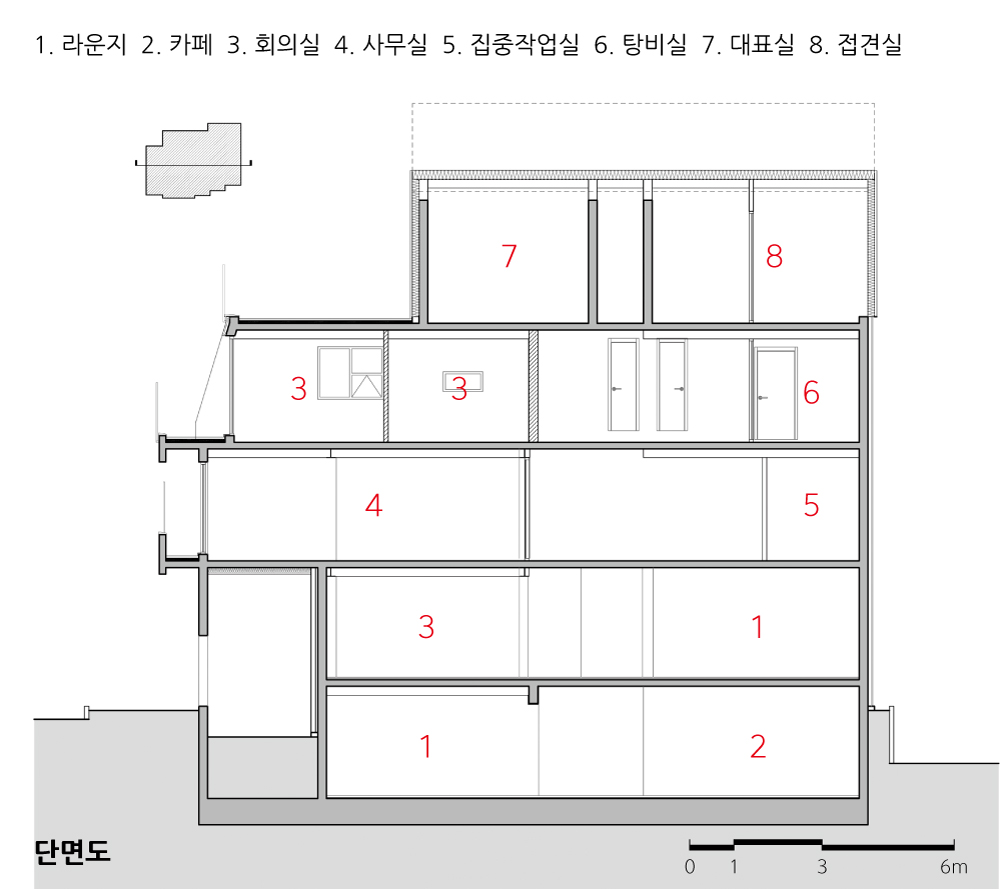
법적 주차대수가 적어지면서 기존의 지하 주차장은 사내 카페라는 새로운 형태로 변경되었다. 환기를 위한 DA는 채광을 위한 천창으로 바뀌었고, 경사로는 계단으로 바뀌어 외부에서 바로 들어올 수 있도록 하였다. 회사에 도착하면 바로 들어갈 수 있으며, 사내 커뮤니티 공간으로 작은 담소를 나누며 기분 좋게 하루를 시작하는 공간의 기점이 될 수 있도록 계획하였다.
2) 단위세대의 변화
사옥이 일반 업무시설과 다른 점은 맞춤복과 같이 명확한 사용 인원과 업무환경이 있다는 것이다. 건물의 구조가 정해져 있다 보니 각 층의 업무공간은 정해진 인원과 구성해야 하는 다양한 변수를 검토해야 했고, 한정된 구조에서 각각의 업무공간이 구성되도록 다양한 업무패턴을 만들어야 했다.
3) 물탱크실의 변화
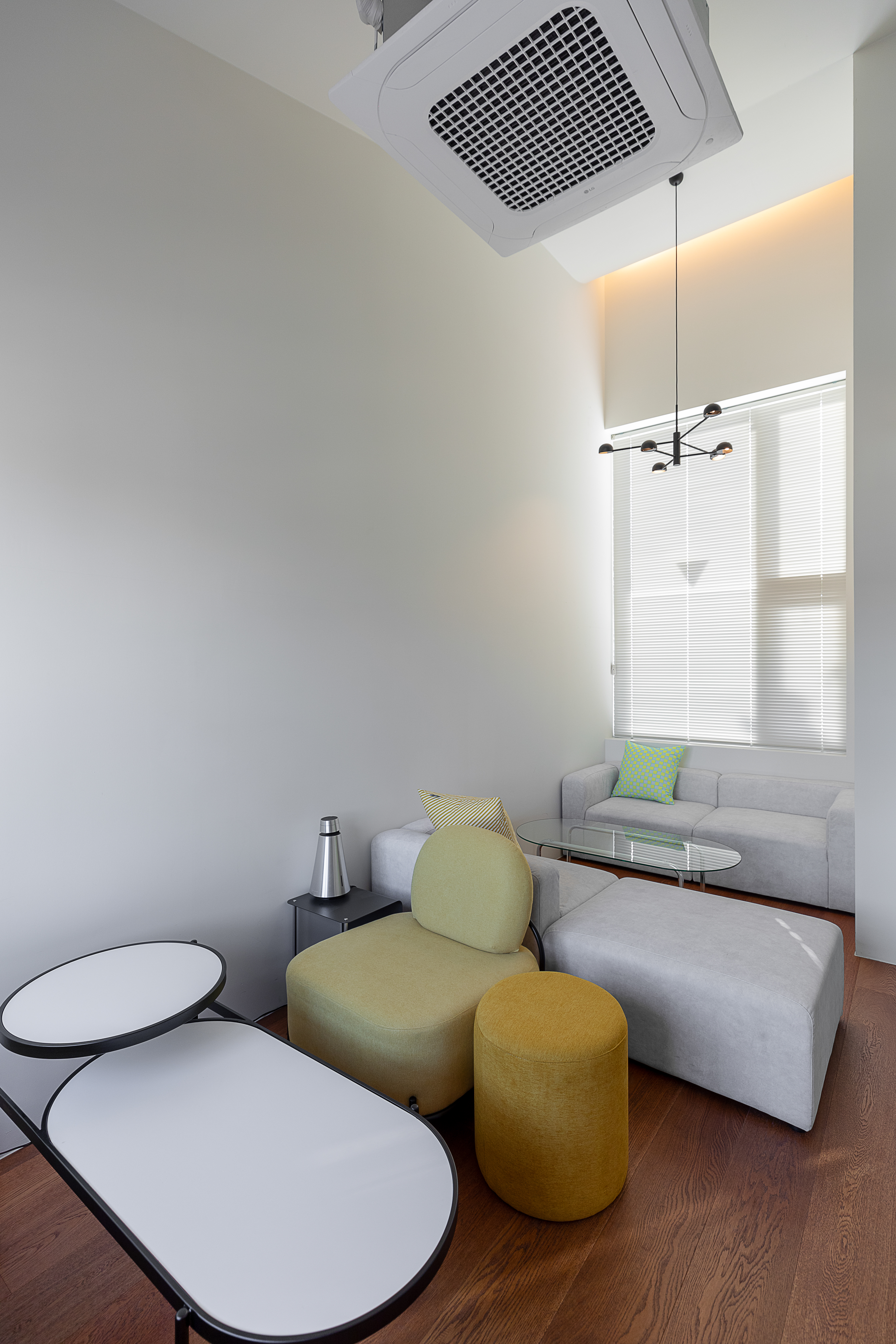
물탱크실은 증축을 통해 대표실과 휴게공간으로 변경되었다. 다른 실들과 다르게 가로로 긴 창을 넣어, 도심에서 보기 힘든 녹지공간 선릉을 바라보는 뷰를 만들었다. 남은 공간을 테라스로 만들어 업무공간에서 바로 외부공간과 연계할 수 있도록 하였다.
공간의 정합성과 합리성
과거의 경험을 통해 리모델링에서의 모호함은 잦은 구조변경과 공사비, 공사 기간 상승을 가져온다는 것을 알게 되었다. 그러하기에 마감이 철거되고 건물의 구조체가 드러나는 순간이 리모델링 프로젝트에서 가장 중요한 순간이었고, 이때 정확한 방향을 잡지 못한다면 프로젝트는 표류하게 되고, 큰 리스크를 받을 수 있었다.
프로젝트의 정합성을 위해 3차원 레이저 스캐닝과 BIM 프로그램을 통한 역설계를 진행했다. 초기 디자인은 기존의 사용승인 도면을 기초로 하여 계획 방향을 잡을 수밖에 없으며, 완공된 건물과 도면 사이에는 여러 이유로 오차가 발생하기 마련이었다. 그러기에 실측을 통해 역설계된 모델링과 사용승인도면을 오버랩하여, 간극을 최소화하는 과정이 필요하다. 도면을 수정하는 과정은 동시에 시공 방향을 수정하는 것이며, 설계자는 시공의 과정에 깊숙이 개입하게 된다. 디테일한 시공 방향의 설정은 시공자와 함께 논의되며, 신축과는 다소 다른 과정으로 진행되게 된다. 현대적 의미의 설계자라기보다는 건축 과정 전체를 총괄하는 근대 이전의 Arkhitékton과 비슷한 역할을 하게 된다.
외피 디자인
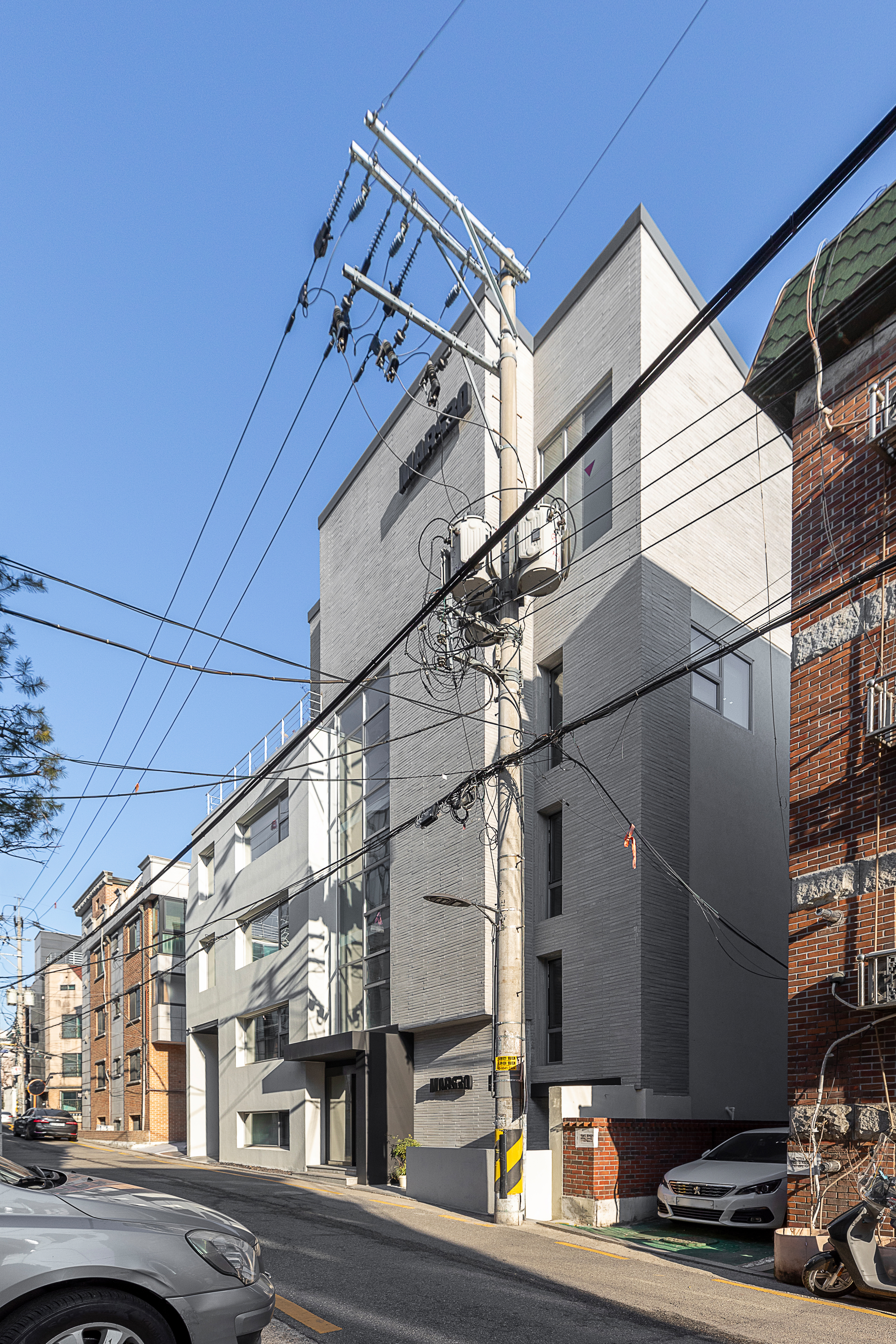
주거지역이라는 공간적 문맥과 사용자의 업무환경을 고려해 커튼월 형태의 오픈된 외피보다는 기존의 외벽을 사용환경에 맞게 조금 더 확대하는 방향으로 입면계획을 진행하였다. 마감은 기존 주택들과의 간극을 줄이고, 도시의 배경이 될 수 있도록 밝은 회색 모노롱 타일과 백색의 스타코로 조합하였다.
리모델링은 외형적 디자인뿐만 아니라 부족한 건축성능도 끌어올릴 필요가 있었다. 좁은 도로에 응달이 지어지는 외벽환경을 고려해서 최종 마감 전 단열재를 15cm로 보강하였으며 주변 건물이 낮아 수평면 직달 일사가 강해서 지붕은 외단열 역전지붕으로 설계하였다.
결언
건물은 주택가 한 모퉁이에 주변과 어울리도록 계획하였다. 그러나 내부는 사뭇 다른 형태를 가지고 있으며, 주변 건물들과는 다른 프로그램으로 채워져 있다. 개성이라는 이름으로 자신을 드러내기 위한 이질적 존재로서의 건축이 되기보다는 주변과 어울리며 자연스럽게 변해가는 도시구조의 한 조직으로 자리 잡기를 선택한 건물은 변화의 길목에서 새롭게 변화될 때까지 자신의 역할을 다 할 수 있기를 바란다.


Changes in Urban Structure
Between Seolleung Station and Seonjeongneung Station, across from Seolleung, lies a small pocket of low-rise residential area. Within the neighborhood, small plots of around 200 square meters line the streets side by side. Most buildings are four stories or less and have traditionally housed single-person households or low-income residents working nearby. The top floors were often occupied by the owners themselves, but over time many moved to apartments and began renting out their buildings. After 2020, land prices in the area reached a peak. With an oversupply of small multi-family housing, many single-person households shifted to alternative housing types such as officetels. Gradually, the neighborhood began to change—from low-rise residential buildings to low-rise neighborhood commercial facilities. It was during this period that we took on this project. Due to the sharp rise in construction costs and economic uncertainty, the client decided to shift from new construction to remodeling. We were faced with the difficult task of transforming the appearance of a multi-family housing building into that of a company headquarters.
Changes in Program
The existing multi-family housing was divided into three to four units per floor, with room sizes too small to function effectively as office space. A simultaneous change in both program and structure was required. Partition walls between units were removed, bathrooms and doors were demolished, and new columns were added to reinforce the structure. To avoid reducing spatial efficiency, columns were placed only where structurally necessary. Portions of the floor slab were also removed to install an elevator. With a low floor-to-floor height of 2.7 meters, we exposed the ceiling—except for essential mechanical systems—to secure as much ceiling height as possible.
1) Transformation of the Basement Parking Lot
As the required number of parking spaces was reduced, the existing basement parking area was converted into an in-house café. Ventilation ducts were replaced with skylights for natural light, and the ramp was transformed into stairs, allowing direct access from outside. This space was planned as the first point of arrival—a place where employees can start the day comfortably, gathering for small conversations within a shared community space.
2) Transformation of the Typical Floors
Unlike standard office buildings, a company headquarters has a clearly defined number of users and specific working conditions—much like a tailored suit. Given the fixed structural framework, each floor had to be carefully planned to accommodate different team sizes and work styles. Various working patterns were developed so that each floor could function effectively within the given structural limits.
3) Transformation of the Water Tank Room
The water tank room was expanded and converted into the CEO’s office and a lounge area. A long horizontal window was introduced, offering views toward Seolleung’s green landscape—an uncommon sight in the dense city. The remaining space was designed as a terrace, directly connecting indoor workspaces with the outdoors.
Spatial Consistency and Rationality
Through past experience, we learned that ambiguity in remodeling often leads to frequent structural changes, increased construction costs, and longer schedules. The most critical moment in a remodeling project comes when finishes are removed and the structural frame is fully exposed. Without a clear direction at this stage, the project can easily drift and face significant risks. To ensure consistency, we conducted reverse engineering using 3D laser scanning and BIM. Initial design inevitably relied on existing approval drawings, yet discrepancies between drawings and the actual building were unavoidable. By overlaying the scanned model with the original drawings, we minimized these gaps. Revising drawings meant revising construction methods, requiring the architect’s deep involvement in the building process. Detailed construction strategies were discussed closely with the contractor, following a process quite different from new construction. In this sense, the architect’s role resembled that of the pre-modern Arkhitékton—overseeing the entire building process rather than focusing solely on design.
Facade Design
Considering the residential context and the working environment inside, we avoided an open curtain-wall façade. Instead, we expanded and adjusted the existing exterior walls to better suit the new use. The façade was finished with light gray monochrome tiles and white stucco, narrowing the visual gap with surrounding houses and allowing the building to act as a quiet urban backdrop. Beyond appearance, the remodeling also aimed to improve building performance. Given the narrow streets and shaded conditions, exterior insulation was reinforced to 150 mm before final finishing. As neighboring buildings are relatively low and direct solar exposure on the roof is strong, the roof was designed as an inverted roof system with external insulation.
Conclusion
The building was planned to blend naturally into a corner of a residential neighborhood. Inside, however, it contains a distinctly different spatial character and program from its surroundings. Rather than standing out as an isolated object under the name of individuality, the building chooses to coexist—becoming one element within an evolving urban structure. Positioned at a point of transition, it is hoped that the building will continue to fulfill its role until it, too, is transformed by the city’s next change.



| 마스삼공 사옥 설계자 | 박준 건축사_ 무인 건축사사무소 건축주 | (주)마스삼공 감리자 | 박준 _ 무인 건축사사무소 시공사 | (주)자람건설 설계팀 | 허현철, 오양가, 전휘원 대지위치 | 서울특별시 강남구 역삼동 주요용도 | 제2종 근린생활시설(사무소) 대지면적 | 236.90㎡ 건축면적 | 138.63㎡ 연면적 | 529.26㎡ 건폐율 | 58.52% 용적률 | 174.41% 규모 | B1F - 4F 구조 | 철근콘크리트구조, 철골구조 외부마감재 | 스타코, 모노롱타일 내부마감재 | 콘크리트노출, 친환경페인트, 콩자갈 설계기간 | 2023. 03 - 2023. 08 공사기간 | 2023. 09 - 2024. 07 사진 | 오세원 구조분야 | 도시구조안전주식회사 기계설비·전기·소방분야 | 대광이엔씨 |
Mars 30 office Architect | Park Jun_MUIN Architects Client | MARS30 Supervisor | Park Jun _ MUIN Architects Construction | JARAM Construction Project team | Heo Hyunchul / Uyanga / Jeon Hwiwon Location | Yeoksam-dong, Gangnam-gu, Seoul Program | Neighborhood living facility(office) Site area | 236.90㎡ Building area | 138.63㎡ Gross floor area | 529.26㎡ Building to land ratio | 58.52% Floor area ratio | 174.41% Building scope | B1F - 4F Structure | RC, Steel structure Exterior finishing | Stucco, Longbrick tile Interior finishing | Concrete, Eco-friendly Paint, Pebble Stone Design period | Mar. 2023 - Aug. 2023 Construction period | Sep. 2023 - Jul. 2024 Photograph | Oh Sewon Structural engineer | DOSIGUJO Mechanical·Electrical·Fire engineer | DAEGWANG ENC. |
'회원작품 | Projects > Office' 카테고리의 다른 글
| 밀양시 선거관리위원회 청사 2026.2 (0) | 2026.02.27 |
|---|---|
| 인탈리오 2026.1 (0) | 2026.01.30 |
| SK하이닉스 용인반도체클러스터 2026.1 (0) | 2026.01.30 |
| 교촌1991빌딩 2025.12 (0) | 2025.12.31 |
| 선데이브런치 HQ 2025.10 (0) | 2025.10.31 |