
2025. 12. 31. 11:05ㆍ회원작품 | Projects/House
SeoHeeJae

자연을 가까이 두고 사는 집
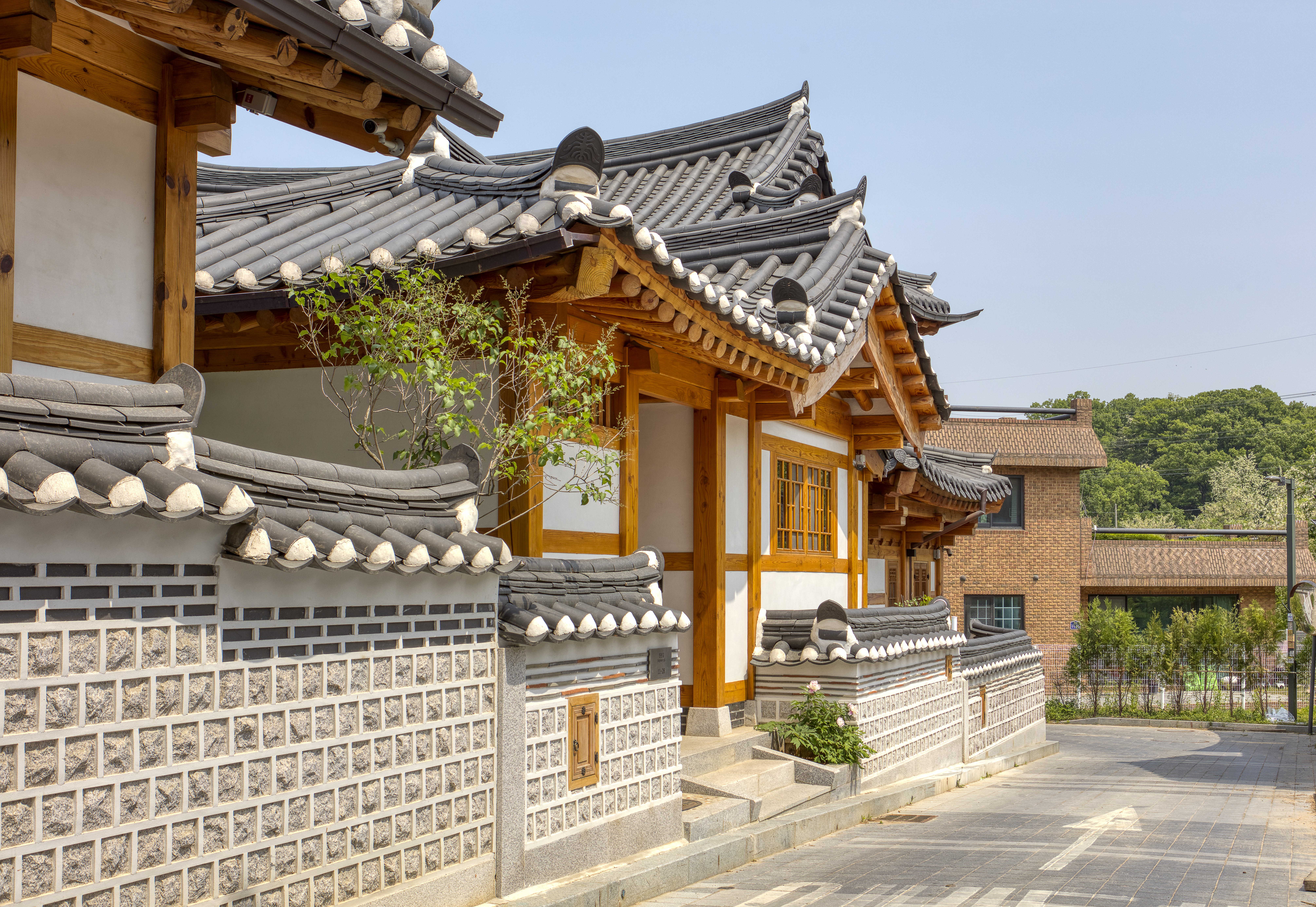

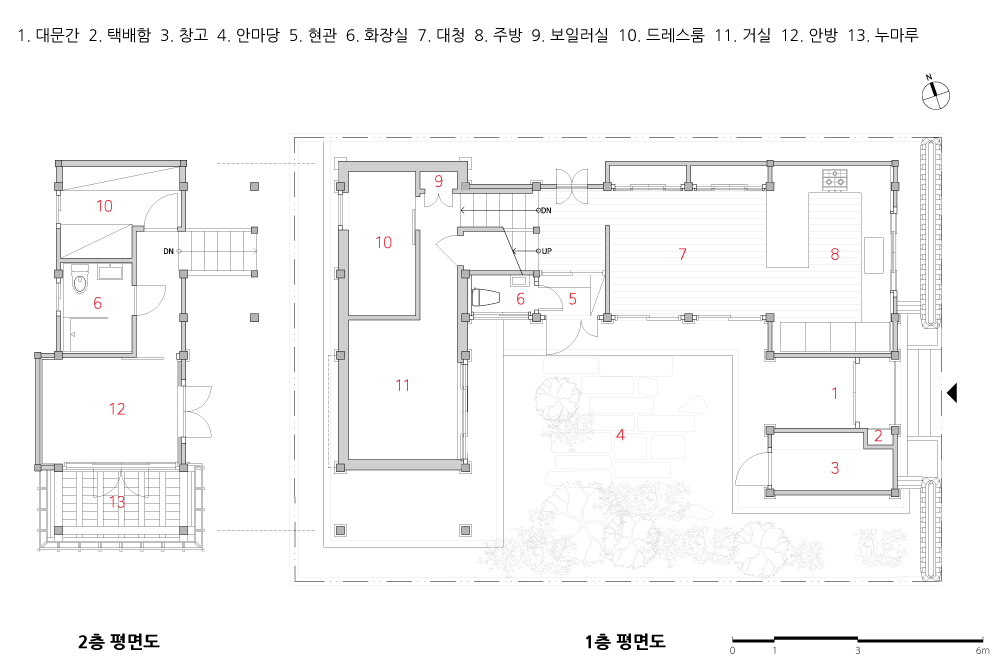
서희재는 도시 속에서 자연과 더불어 살아가는 삶을 실현하고자 했다. 집은 마당을 중심으로 ‘ㄷ’ 자 형태로 배치되었다. 대청과 누마루는 마당을 향해 열려 있어 자연을 일상 속으로 끌어들이며, 열린 구조는 공간 간 경계를 흐리게 하고 자연과 함께 머무는 공간으로 만든다.
거실과 침실을 잇는 스킵플로어 구조
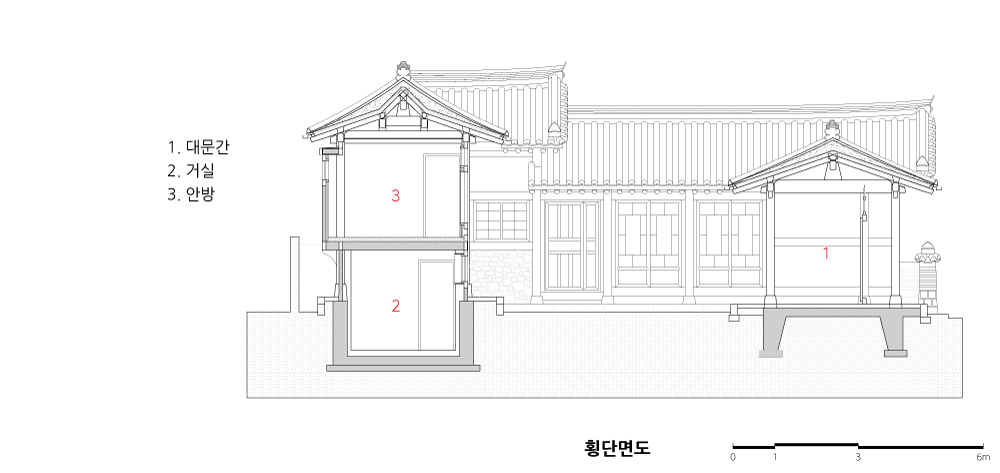
“2층은 다리가 아프다”는 건축주의 말을 반영해, 여섯 계단씩만 오르내리는 스킵플로어 구조를 적용했다. 반층 단차는 공간 간 연결성을 자연스럽게 조절하고, 거실과 침실은 시각적으로는 분리되나 동선은 유기적으로 이어진다.
서희재의 누마루
전통적 요소인 누마루는 집의 핵심이자 최고의 조망을 갖춘 공간이다. 인접한 옆집과의 시선을 고려해 개폐 가능한 한식 판문을 설치해 프라이버시를 조절했다. 덕분에 침실에서는 공간의 깊이를 경험할 수 있다. 정면은 북한산을 향해 열려 있어, 실내에서도 자연을 감상할 수 있도록 했다.
대조적인 공간들이 마당을 중심으로
전통 한옥에서 대청은 여름 공간으로, 목구조가 시원하게 드러나고 마당과 바로 맞닿아 있어 탁월한 개방성과 휴식 기능을 제공한다. 반면 방은 겨울 공간으로, 한지로 마감되어 폐쇄적이면서도 아늑한 분위기를 자아낸다.
서희재는 이러한 전통 한옥의 특징을 살려, 대조적인 성격의 두 공간(대청과 방)을 마당을 중심으로 나란히 배치했다. 이를 통해 외부와의 활발한 소통은 유지하면서도 개인의 사적인 경계를 동시에 확보하는 공간을 구현한다.
심사평
은평한옥마을은 2014년 12월경부터 신(新) 한옥 전용 주거단지로 조성되었다. 우리 전통의 멋을 간직한 한옥들이 한채, 두채 지어짐에 따라 단지의 빈터가 거의 채워지고 있다. 지방의 민속 마을이나 서울의 북촌 한옥마을과는 다르게 이십여 년의 짧은 기간 동안에 조성된 마을이다 보니 시간의 흐름 속에서 공간의 위치에 따른 잠재된 표현에 있어서 다양한 마을 사람들의 정서까지는 담아내지 못하고 있는 점이 아쉽기는 하다. 그 가운데 눈에 번쩍 띄는 가옥이 자리하고 있다. 대문 앞에 걸린 편액 서희재(曙熙齋)를 만났다. 편액은 집주인의 성품을 잘 아는 지인이 지어 주는 경우도 있고, 자기 스스로 인생을 살아오면서 지녀야 할 가치를 함축시키기도 하며, 때로는 이 집을 지으면서 느낀 감흥을 그대로 표현하여 집의 성격을 나타낼 때도 있다. 2022년 서울시 올해의 한옥으로 뽑히기도 한 이 집의 건축주가 당시 대담한 내용을 살펴보니 누마루가 가장 애착이 가는 공간이라고 한다. 안방에서 남쪽으로 출입하는 높지막한 작은 누마루에서 동편의 북한산 자락을 바라보니 ‘서희재’라 명명한 이유를 짐작케 한다. 누마루에 올라 새벽 여명의 빛이 비치면서 서서히 밝아짐에 희망을 느끼는 건축주의 평온한 마음을 엿볼 수 있다. 남북으로 난 골목길 서쪽에 자리하며, 마당을 두고 안쪽에 안방이 위치하고 있다 보니 누마루는 동향이 되며 따라서 아침해의 조망이 좋다. 대문을 들어서면 동서로 긴 대지에 마당을 두고 ‘ㄷ’ 자 형태의 평면을 하고 있다. 마당은 돌과 굵은 모래를 제외하고 수국과 단풍나무, 온갖 꽃을 빼곡하게 심었다. 자연과 가까이하며 마당공간을 크게 두어 거실과 주방, 안방에서도 마당공간과 열려 있게 배치하였다. 대문칸과 마당을 남쪽으로 길게 접한 대청이었을 거실과 주방은 단층으로 하였고 서쪽으로 서재느낌의 침실은 아래로 몇 계단 내려가 배치하고, 그 상부는 안방과 누마루를 두어 복층 형태로 자리하였다. 은평 한옥 대부분이 2층으로, 실내공간을 넓게 하려고 마당을 좁게 한 한옥이 많아 답답한 느낌이 드는 경우가 많은데, 이곳은 다소 좁은 대지임에도 불구하고 복층 형태를 서쪽으로 일부만 배치하여 열려 있는 개방감이 크다. 비교적 작은 규모지만 주거에 필요한 기능이 잘 갖춰져 있다. 외부의 단열과 보안도 중시하면서 내부 창호는 전통으로 하고 한지를 정성껏 발랐다.
설계자는 다니엘 텐들러와 최지희 건축사다. 구례 운조루 사랑채 끝에 있는 누마루와 행랑채 너머로 산이 보이는 풍경에서 착안하였다는 이 한옥은 건축주의 한옥 사랑을 한껏 담아 완성한 수작이다.

A Home Designed to Live Close to Nature
SeoHeeJae was conceived as a house that brings daily life into close relationship with nature even within an urban setting. The home is arranged in a “ㄷ”-shaped plan centered around a courtyard. The daecheong and numaru—the primary open spaces—face the courtyard, drawing natural elements into the interior and creating a fluid, continuous atmosphere where boundaries between spaces gently dissolve.
Skip-Floor Layout Connecting Living Room and Bedroom
Reflecting the homeowner’s comment that “a full second floor is too tiring to climb,” the design adopts a skip-floor configuration with only six steps between levels. This half-level shift creates a natural gradation between spaces, allowing the living room and bedroom to feel visually distinct while remaining seamlessly connected through circulation.
The Numaru: The Heart of SeoHeeJae
The numaru, a traditional elevated wooden platform, is the focal point of the house and offers its best views. To maintain privacy from the neighboring house, operable traditional wooden panels were installed, enabling the resident to control openness while preserving depth within the space. The numaru opens directly toward the ridges of Bukhansan, allowing the residents to enjoy the changing scenery from inside the home.
Contrasting Spaces Organized Around the Courtyard
In a traditional hanok, the daecheong functions as a summer space—cool, airy, and directly connected to the courtyard—while the enclosed rooms, finished with hanji, serve as warm and quiet winter spaces. SeoHeeJae preserves this duality by arranging the contrasting spaces side by side around the courtyard. This spatial composition maintains a strong connection to the outdoors while securing privacy and intimacy for the residents.
Commentary
Eunpyeong Hanok Village has been developed as a dedicated new-hanok residential district since around 2014. Unlike long-established traditional villages such as those in rural regions or Bukchon in Seoul, this neighborhood has formed over a relatively short period of about twenty years, and therefore does not yet fully reflect the accumulated cultural expressions or communal sensibilities shaped over generations. Within this context, SeoHeeJae stands out as a notable example.
The residence, named SeoHeeJae, reflects values and impressions significant to the homeowner. According to an interview conducted when the project was selected as “Seoul Hanok of the Year” in 2022, the homeowner identified the numaru as the most cherished space in the house. From the elevated numaru connected to the main room, one can look eastward toward the ridges of Bukhansan, suggesting a clear rationale for the name SeoHeeJae. The numaru is oriented to capture the morning light, and its position—on the west side of a north–south alley with the main room located inward beyond the courtyard—supports this relationship to the early sun.
The site is elongated east–west, with a courtyard at the center and an overall “ㄷ”-shaped plan. The courtyard is densely planted with hydrangeas, maples, and seasonal flowers, except for areas of stone and coarse sand. The main living spaces, including the living room, kitchen, and main room, are arranged to maintain a direct connection with this outdoor area. The living room and kitchen along the south side are kept as single-story volumes adjacent to the entry section, while the study-like bedroom on the west side is set a few steps lower; above it are the main room and numaru, forming a partial two-story configuration. This approach maintains openness despite the small site, in contrast to many two-story hanok in the district where maximizing interior area has resulted in narrowed courtyards.
Although compact, the house accommodates all essential residential functions. Exterior insulation and security were considered, while traditional interior joinery and carefully finished hanji were applied. The architects, Daniel Tendler and Choi Ji-hee, drew inspiration from views seen from the numaru at the end of the sarangchae in Unjoru, Gurye, where the landscape is framed beyond the haengnangchae. SeoHeeJae is a well-executed project that captures both the homeowner’s affinity for hanok and a clear architectural intent.


| 서희재(曙熙齋) 설계자 | 최지희 건축사_ (주)어번디테일 건축사사무소 시공자 | 김희진 건축주 | 김희진 공동설계 | 성수진(AIA) _ Studio BA 감리자 | (주)어번디테일 건축사사무소 설계팀 | 텐들러 다니엘, 이상훈 설계의도 구현 | (주)어번디테일 건축사사무소 대지위치 | 서울특별시 은평구 진관동 주요용도 | 단독주택 대지면적 | 165.00㎡ 건축면적 | 71.45㎡ 연면적 | 98.49㎡ 건폐율 | 43.30% 용적률 | 59.69% 규모 | 2F 구조 | 한식목구조 외부마감재 | 육송, 한식회미장, 자연석, 한식기와 내부마감재 | 육송, 수성페인트, 한지도배, 타일, 원목마루 설계기간 | 2019. 02 - 2019. 08 공사기간 | 2019. 10 – 2021. 05 사진 | 이상훈 _ Hooxme |
SeoHeeJae Architect | Choi, Jihee _ Urbandetail Architecture Construction | Kim, Heejin Client | Kim, Heejin Collaborative design | Sung Suejin(AIA) _ Studio BA Supervisor | Urbandetail Architecture Project team | Taendler Daniel / Lee, Sanghoon Design intention realization | Urbandetail Architecture Location | Jingwan-dong, Eunpyeong-gu, Seoul Program | Single family house Site area | 165.00㎡ Building area | 71.45㎡ Gross floor area | 98.49㎡ Building to land ratio | 43.30% Floor area ratio | 59.69% Building scope | 2F Structure | Korean Wooden Structure Exterior finishing | Red pine, Korean plaster, Stone, Korean roof tile Interior finishing | Red pine, Water-based paint, Hanji, Tile, Hardwood floor Design period | Feb. 2019 - Aug. 2019 Construction period | Oct. 2019 - May. 2021 Photograph | Lee, Sanghoon _ Hooxme |
'회원작품 | Projects > House' 카테고리의 다른 글
| 빙그레-가 2026.1 (0) | 2026.01.30 |
|---|---|
| 서울 e편한세상 어반브릿지 2025.12 (0) | 2025.12.31 |
| 더한옥헤리티지 하우스 종택 2025.12 (0) | 2025.12.31 |
| 모노섬 2025.11 (0) | 2025.11.28 |
| 무위재 2025.11 (0) | 2025.11.28 |